

The Genesee River cuts straight through the middle of this city, dropping over High Falls downtown before it runs north through a deep gorge to meet Lake Ontario at Charlotte. A March thaw in 1865 sent it over its banks in what is still counted as the worst Genesee flood in local history, and severe floods kept returning roughly every seven years until the Mount Morris Dam was finished upstream in 1952. Today most wet basements here have less to do with the river than with snowmelt, summer downpours, frozen pipes and an aging sewer network.
The Restoration Job is a free referral service and does not do restoration work itself. Call (888) 317-9980 at any hour and we'll connect you with an independent restoration provider that serves Rochester, whether the problem is a burst pipe in a South Wedge rental, a flooded cellar in the 19th Ward or a leaking roof after a lake-effect storm.
How the call works: when you call (888) 317-9980, The Restoration Job connects you with an independent restoration provider that serves Rochester. That provider inspects the damage, explains the scope and quotes the work. The Restoration Job doesn't perform restoration itself. Read our referral disclosure.
The Genesee, the Dam Upstream and What It Still Can't Stop
The Army Corps of Engineers credits the Mount Morris Dam with preventing an estimated $1 billion in flood damage downstream since 1952. Its one real test came in June 1972, when the rains of Hurricane Agnes filled the reservoir past its storage capacity for the only time in its history, and operators had to release water through the gates to keep the spillway from overtopping. That event is a useful reminder: the dam reduces river flood risk for the city, it doesn't remove it.
The dam also does nothing about water that never reaches the river. Rochester covers about 37 square miles with elevations from roughly 230 feet near the lake to about 700 feet on the south side, and heavy rain collects in low streets, backyards and window wells long before it drains away. Homes close to the gorge, along the Erie Canal on the south side, or in Charlotte near the river mouth deserve a look at FEMA's flood maps even if no one on the block remembers a flood.
Combined Sewers and Basement Backups
Much of the city is served by combined sewers, where stormwater and household sewage share the same pipe. Monroe County's Pure Waters program built large storage tunnels beneath the most overloaded parts of the network to cut overflows into the Genesee River, Irondequoit Bay and the canal, but during an intense storm the local lines feeding those tunnels can still surcharge. When that happens, the water that comes up through a floor drain is not clean rainwater.
- Treat any backup through a basement drain, toilet or laundry tub as contaminated and keep children and pets away from it.
- Throw out porous items that soaked in it, such as carpet, cardboard, upholstered furniture and the lower part of drywall.
- Ask about a backwater valve once the space is clean; many older houses have none.
Contaminated water calls for proper sewage cleanup, including disinfection of concrete and framing, rather than a shop vacuum and a fan.
Nineteenth-Century Houses, Rentals and Who Calls Whom
Corn Hill, on the west bank of the river just south of downtown, has about 126 historic buildings dating from roughly 1830 to 1880, many in Greek Revival and Italianate styles. Similar older housing runs through Park Avenue, Browncroft, Swillburg and the 19th Ward. Those houses tend to have stone or brick foundations that seep in spring, plaster walls that hold moisture longer than drywall, and plumbing that has been patched by several generations of owners.
About two-thirds of the city's housing units are rented, so a leak often involves two parties. Tenants should notify the landlord in writing right away and photograph damaged belongings, which renters insurance, not the building owner's policy, usually covers. Owners are typically responsible for the structure itself and for water damage repair to walls, floors and fixtures.
A Hundred Inches of Snow and the Spring That Follows
The 30-year average snowfall here is just over 100 inches, and January's daily mean sits around 26 degrees, with a few nights below zero most winters. That combination produces a predictable set of calls: supply lines that freeze in exterior walls and split when they thaw, ice dams that push meltwater under shingles and into ceilings, and late-winter thaws that saturate the ground against foundation walls. Water heaters and boilers in older cellars add their own failures.
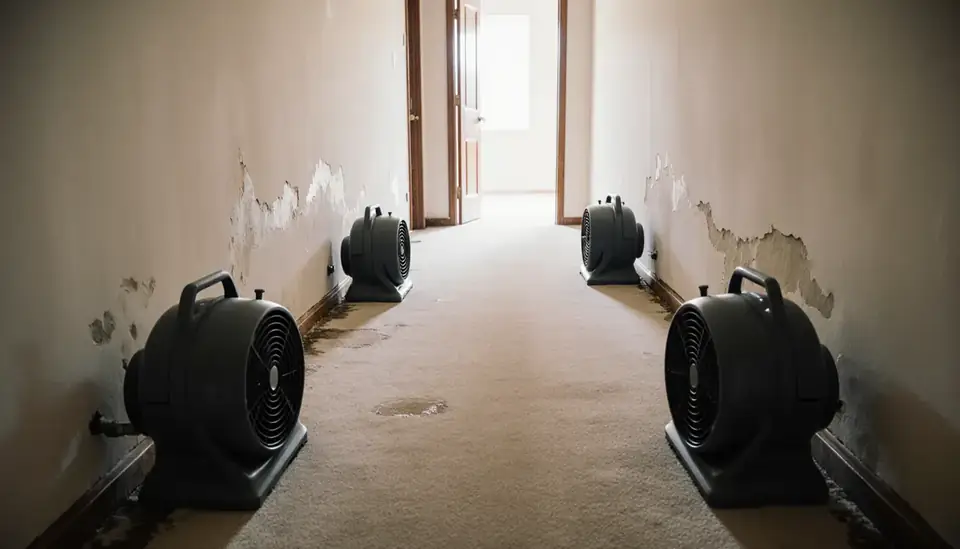
A restoration crew will usually start by stopping the source and pulling standing water, then set up air movers and dehumidifiers and track moisture readings in framing and plaster until they reach normal levels. Thorough structural drying matters more in a cold climate than many people expect, because a wall closed up while still damp can stay wet well into the next season.

Keeping Mold Out of Cool, Damp Cellars
Summers in the city are among the coolest of any large U.S. metro, but basements stay damp for much of the year, and stone foundations wick moisture from the soil. Mold tends to show up on the paper face of finished-basement drywall, under carpet pads, on stored boxes and on wood sill plates. Running a dehumidifier through the warm months and keeping stored items off the floor goes a long way. When growth covers a large area or follows a sewage backup, New York has a state program covering mold assessment and remediation work, so ask any contractor how their work meets it.
Neighborhoods and Nearby Communities
Calls come in from across Rochester, including:
- Corn Hill
- South Wedge
- Park Avenue
- 19th Ward
- Charlotte
- Browncroft
- Swillburg
- Maplewood
- Highland Park
- North Winton Village
The same line also serves nearby communities such as:
- Irondequoit
- Greece
- Webster
- Brighton
- Gates
- Chili
Rochester Water Damage Questions
Does the Mount Morris Dam mean my Rochester home can't flood?
No. The dam, finished in 1952, greatly reduces flood risk from the Genesee between Mount Morris and Lake Ontario, but during Hurricane Agnes in 1972 inflows still exceeded its storage and water had to be released. It also has no effect on street flooding, sewer backups or groundwater seepage, which cause most basement damage in the city. Check your address on FEMA's flood map and consider whether a separate flood policy makes sense.
Storm water rose out of a basement drain in my Rochester house. Is that coming from the sewer?
Very possibly. Much of the city has combined sewers that carry both rainwater and sewage, and during intense storms local lines can back up into basements. Assume the water is contaminated, avoid contact, and have porous materials it touched removed and the area disinfected. Many standard homeowners policies exclude sewer backup unless you added that coverage, so check your policy and document everything with photos before cleanup begins.
I rent an apartment and the ceiling is leaking. What should I do first?
Shut off water to the fixture if you can find the source, move belongings away from the drip, and notify your landlord in writing with photos and the time you noticed the leak. The owner is generally responsible for repairing the building, while your own renters policy, if you have one, usually covers your belongings. You can also call (888) 317-9980 to be connected with an independent provider serving Rochester if the owner asks you to arrange help.