

Coos Bay curls almost all the way around North Bend, leaving the city on a peninsula whose average elevation is only about 13 feet. Roughly a fifth of its area is open water. Since 1936, the McCullough Memorial Bridge has carried Highway 101 through town and across the bay, and the city is home to Southwest Oregon Regional Airport. About 64.7 inches of rain fall in a typical year, almost none of it in July and August and most of it in a long stretch from fall through spring.
Our service is a free connection, not a contractor. Call (888) 317-9980 at any hour and we'll connect you with an independent restoration provider working in North Bend and the surrounding bay area. That provider evaluates the damage and handles the job with you directly.
How the call works: when you call (888) 317-9980, The Restoration Job connects you with an independent restoration provider that serves North Bend. That provider inspects the damage, explains the scope and quotes the work. The Restoration Job doesn't perform restoration itself. Read our referral disclosure.
Peninsula Living: Rain, Tides and Low Ground
On a low peninsula, rainwater has nowhere to go but out toward the bay, and during big storms it moves slowly. Yards pond, crawl spaces take on water through foundation vents, and soil stays saturated for weeks. The wet season also lasts long enough that small problems compound: a gutter that overflows in November can have kept a sill plate wet until March.
Wind is the other half of the story. Storms crossing the bay drive rain into siding and window frames on the exposed sides of houses, and leaks from that kind of rain often show up far from where the water actually entered. When you find a stain, trace it upward and outward before you assume the roof is the culprit.
Sewer Backups and Who Pays for the Lateral
A sewage backup is one of the most unpleasant calls a household can make, and in North Bend the city spells out who is responsible. According to the city's Public Works guidance, blockages on your property caused by kitchen grease or tree and shrub roots are repaired at the homeowner's cost. Failures caused by poor pipe quality, installation defects or age are the city's responsibility. For the stretch between the property line and the main, it depends on the cause, and the city asks owners to contact it first to confirm whether it accepts responsibility before repairs begin.
Whoever fixes the pipe, the water that came up through a floor drain or toilet is contaminated. Sewage cleanup involves removing affected porous materials, cleaning and disinfecting hard surfaces, and drying the structure before anything is rebuilt. Keep children and pets out of the area until that work is finished.
Water Damage in a North Bend Rental
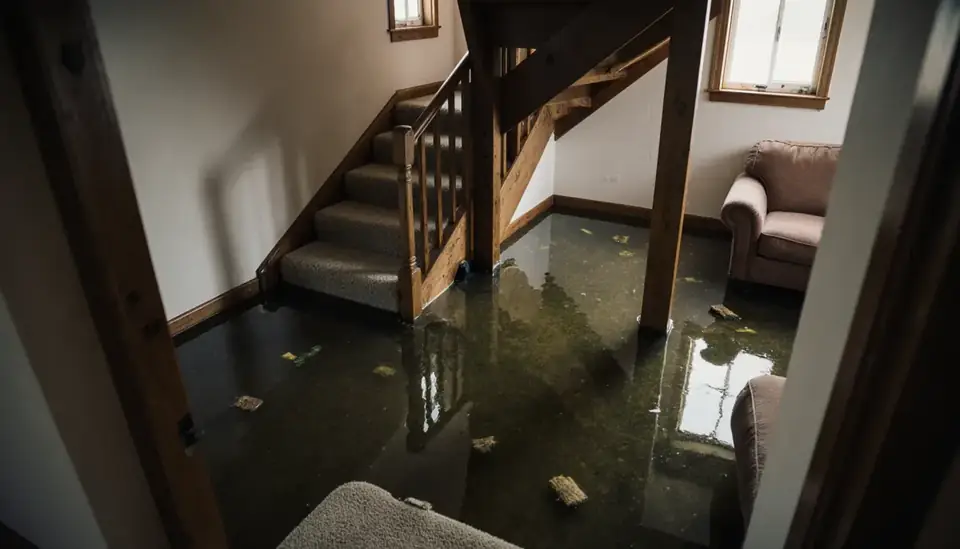
More than four in ten occupied homes in North Bend are rented. When water damage happens in a rental, tell the landlord or property manager in writing right away and take dated photos. The owner is normally responsible for the building and its repairs, while a renters policy, if you have one, may cover your belongings. In duplexes and small apartment buildings, a leak in one unit often spreads to the next, so the sooner everyone involved knows, the less drywall and flooring has to be replaced. A restoration provider can document moisture readings for both parties.
Marine Air, Slow Drying and Mold on the Peninsula
The same marine air that keeps summers mild keeps winter humidity high, and it slows the drying of wet wood and wallboard. Opening windows on a drizzly day adds moisture rather than removing it. Effective drying usually means removing standing water, pulling baseboards or cutting flood lines where needed, and running dehumidifiers and air movers until meters show materials are back to normal. Visible mold on framing or drywall after a slow leak is a sign that a water damage repair plan should include mold removal before walls are closed up again.

Coos Bay, Charleston and Tsunami Planning
- Neighbors: North Bend shares the estuary with Coos Bay to the south and the fishing port of Charleston near South Slough. Providers in the area commonly work across all three.
- Tsunami maps: The city's tsunami awareness page explains alert levels and notes that free printed evacuation maps are available at the North Bend Fire Department.
- Alerts: Coos County's emergency notification system sends warnings for storms, floods and other hazards; sign-up is free.
Areas In and Around North Bend
Calls come in from across North Bend, including:
- Old Town
The same line also serves nearby communities such as:
Frequently Asked Questions
My North Bend sewer backed up. Do I call the city or a plumber?
The city's Public Works guidance says to call a plumber first. If the blockage turns out to be beyond your property line, have the plumber note its location and contact the city to inspect the main. Responsibility depends on the cause, such as roots or grease versus pipe age. Meanwhile, contaminated water inside the house should be cleaned up promptly by a provider equipped for sewage.
Why do leaks here seem to appear far from the roof?
Wind-driven rain enters through siding seams, window trim and vents on the windward side of a building, then travels along framing before it shows up as a stain. That is why a leak in a downstairs ceiling can start at an upstairs window. Infrared cameras and moisture meters help a provider trace the path so the right area is dried and repaired.
I rent. Who handles the restoration?
Typically the property owner arranges and pays for building repairs, and your renters insurance, if you carry it, may cover damaged belongings and temporary housing. Report the damage to the landlord in writing, photograph your possessions, and move valuables out of wet areas. If the landlord asks you to find a restoration provider, our line can connect you with one.
Does North Bend have flood maps I can check?
FEMA publishes flood hazard maps for the area through its Flood Map Service Center, where you can search by address. For tsunami zones, the city points residents to online evacuation maps and printed copies at the fire department. Knowing both helps you decide on flood insurance and plan a route to high ground.