

Chillum is framed by water. The Northwest Branch of the Anacostia runs along its eastern edge, and Sligo Creek and East West Highway mark its northern boundary, with Takoma Park on one side and the District's Riggs Park and Queens Chapel neighborhoods on the other. Into these 3.4 square miles fit more than 36,000 people, many of them in apartment complexes that went up from the late 1940s through the 1960s.
Calls to The Restoration Job are free, and we are a referral service rather than a contractor. Dial (888) 317-9980, day or night, and we'll connect you with an independent restoration provider that serves Chillum and neighboring communities such as Hyattsville and Takoma Park. The provider handles the work and the estimate; the connection is free.
How the call works: when you call (888) 317-9980, The Restoration Job connects you with an independent restoration provider that serves Chillum. That provider inspects the damage, explains the scope and quotes the work. The Restoration Job doesn't perform restoration itself. Read our referral disclosure.
Northwest Branch and Sligo Creek on Two Sides
The Northwest Branch is a 21.5-mile stream draining about 53.5 square miles of Montgomery and Prince George's counties, home to roughly 254,000 people. By the time it passes Chillum it is carrying runoff from a heavily built-up watershed that also includes Adelphi, Langley Park and Hyattsville. Sligo Creek, one of its tributaries, follows Chillum's northern edge through parkland and a popular trail.
Prince George's County's flood damage reduction study names the Northwest Branch at East West Highway as one of its ten priority flood problem areas, with 92 structures identified, and nearby Northeast Branch at East West Highway carries 191 more. Homes in low ground close to these streams, and buildings with lower levels facing the stream valleys, carry the most exposure when a thunderstorm stalls over the inner suburbs.
Chillum Heights and the Postwar Apartment Boom
Chillum stayed rural into the 1930s. Developer-built communities such as Green Meadows and Brookdale Manor were platted in the early 1940s, Chillum Heights added 1,147 apartment units in 1949, and larger complexes followed through the 1960s. Those buildings are now 60 to 75 years old. Common water problems in housing of that era include:
- Leaking or corroded supply lines and shutoff valves inside walls.
- Clogged or cracked cast iron drain lines that back up into lower units.
- Roof and flashing leaks on flat or low-slope roofs.
- Radiator, boiler or water heater failures in shared mechanical rooms.
A single failure can affect several units. Renters should report leaks to management in writing, and owners in condominiums should check what the association's master policy covers before work starts.
Heavy Rain and Basement Water in the Inner Suburbs
Flash storms are the main weather threat here. On September 10, 2020, the National Weather Service recorded 2 to 5 inches of rain in a narrow corridor across the Washington area, most of it within two hours, and Prince George's and Montgomery county suburbs were among the hardest hit, with flooded roads and water rescues. In Chillum, that kind of rain overloads storm drains and sends water into basements, garden-level units and window wells.
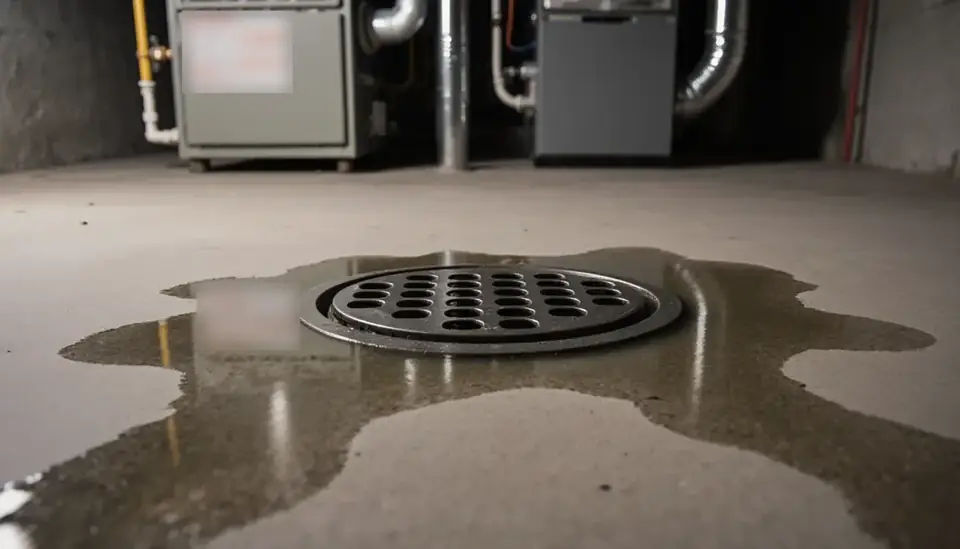
For drainage problems on a residential lot, Prince George's County's Department of the Environment takes complaints through PGC311. If the water came up through a floor drain, report it to WSSC Water at 301-206-4002 and treat it as contaminated; sewage cleanup follows different rules than a clean-water leak.
What Drying a Chillum Apartment or Basement Involves
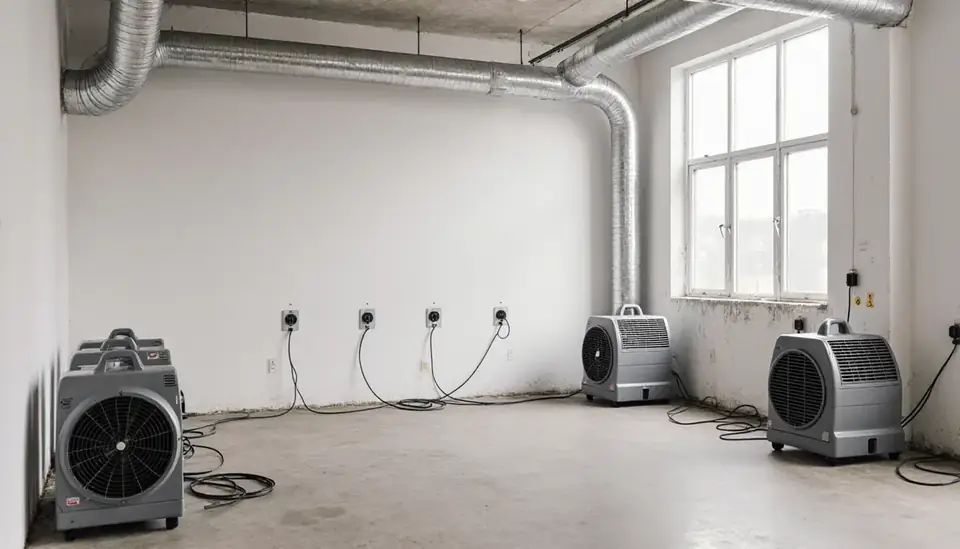
A restoration crew will usually begin by locating the source and using moisture meters and thermal imaging to see how far water has spread, including into adjacent units. Standing water is extracted, carpet pad is typically removed, and wet drywall may be cut back so wall cavities can dry. Dehumidifiers and air movers run for several days, with readings taken until materials reach normal levels. In older buildings with plaster walls and concrete floors, structural drying often takes longer than in newer construction because dense materials hold moisture.
Mold Risk in Stream-Valley Humidity
Low ground near the Northwest Branch and Sligo Creek stays damp, and Maryland summers are humid. Once drywall, carpet or cabinet bases get wet, mold can appear within a few days. Keep lower-level rooms dehumidified, do not close up walls until moisture readings are normal, and watch for musty odors after any leak. Recurring growth in a basement apartment usually means water is still getting in somewhere, and fixing that source matters more than surface cleaning.
Neighborhoods and Nearby Communities
Calls come in from across Chillum, including:
- Chillum Heights
- Brookdale Manor
The same line also serves nearby communities such as:
- Hyattsville
- Takoma Park
- Langley Park
- Adelphi
- Avondale
- Brentwood
Chillum Water Damage Questions
Is Chillum at risk of creek flooding?
Some parts are. The county lists the Northwest Branch at East West Highway among its priority flood areas, with 92 structures identified. Most Chillum homes are not in that group, but low ground close to the Northwest Branch and Sligo Creek can take water in an intense storm. Check your address on FEMA's flood maps and ask the county about an elevation certificate if you live near either stream.
My lower-level apartment flooded after a storm. Who is responsible?
The building owner generally handles the structure, including drywall, flooring and the building's drains, while your belongings are covered only by your own renters policy. Report the water to management in writing with photos and the date. If it came up from a drain, it may contain sewage, so avoid contact. Ask management when drying will start, since delays in a humid lower unit raise the chance of mold.
Does flood insurance make sense in Chillum if I'm not in a mapped flood zone?
It can. Standard homeowners and renters policies typically exclude surface flooding, and storms like September 2020 flooded properties well away from mapped streams. Prince George's County has participated in the National Flood Insurance Program since 1972, so NFIP policies are available to residents. Premiums outside high-risk zones are often lower, and there is usually a waiting period before coverage begins.
Who should I call first when water is pouring in?
If the water is from a broken main or a sewer backup, call WSSC Water at 301-206-4002. For a leak inside your unit, shut the nearest valve and notify building management. After that, a call to (888) 317-9980 can link you with an independent restoration provider for extraction and drying. If water is near outlets or the electrical panel, keep clear and call the utility or 911.