
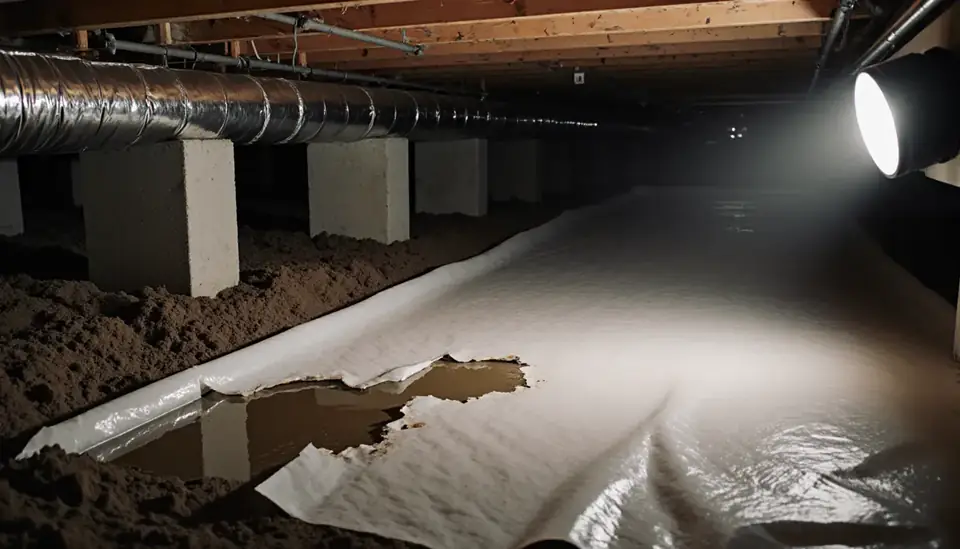
Bend sits at 3,623 feet on the dry side of the Cascades, where the Deschutes River curls through town and pools behind a 1910 dam to form Mirror Pond. The city averages only about 10.6 inches of precipitation a year, so the water that ruins floors and drywall here rarely arrives as a flood from outside. It starts inside the house: a supply line that froze on a single-digit night, a water heater that finally gave out, or a sprinkler backflow assembly that cracked because the lines were never drained before the first hard frost.
For help with a leak like that, call The Restoration Job at (888) 317-9980. The line is free and open around the clock, and we'll connect you with an independent restoration provider that works in Bend and nearby Deschutes County communities. The provider inspects the damage, lays out a drying plan and handles the work and billing directly with you.
How the call works: when you call (888) 317-9980, The Restoration Job connects you with an independent restoration provider that serves Bend. That provider inspects the damage, explains the scope and quotes the work. The Restoration Job doesn't perform restoration itself. Read our referral disclosure.
Twenty-Six Below: Freeze Risk on the High Desert
The coldest reading on record in Bend is 26 degrees below zero, logged in both 1933 and 1950. Extremes like that are rare, but the pattern behind them is not. Clear skies and thin, dry air let heat escape fast after sunset, and in summer the daily swing between afternoon high and overnight low approaches 35 degrees. In winter that same swing drops pipes well below freezing overnight even after a mild afternoon.
Lines most likely to split are the ones running through exterior walls, unheated garages, crawl spaces and the back of kitchen sink cabinets on north-facing walls. The tricky part is timing. A frozen pipe often holds until the ice thaws, and then the crack opens and runs at full pressure, sometimes while the family is at work or on the mountain. A restoration provider will usually start with water extraction and then open up any wall cavity where water ran down behind the drywall.
Snow Years, Ice at the Eaves and Ceiling Stains
Average snowfall in town is 21.6 inches, but that number hides huge swings. The 1973 to 1974 season brought 90.6 inches, while 1976 to 1977 managed just 6.1. In a heavy year, snow sits on roofs for weeks. Warm attic air and afternoon sun melt the bottom layer, the meltwater slides to the cold overhang and refreezes, and the growing ridge of ice pushes water back under shingles. The first sign indoors is usually a brown ring on a bedroom ceiling or a damp spot where an exterior wall meets the ceiling.
Once water has soaked insulation in the attic, it rarely dries well on its own. Wet batts compress and stay damp against the ceiling drywall. Expect a provider to check the attic, remove saturated insulation and run structural drying equipment until moisture readings come back to normal.

Sprinkler Lines, Backflow Assemblies and the Shut-Off Valve
Summer is irrigation season, and the City of Bend leans on groundwater from the Deschutes Regional Aquifer to supplement its watershed supply during peak watering months. Nearly every lawn system in town has a backflow assembly, and the city requires those to be tested every year. Those assemblies sit above ground, often against the house, and they are among the first things to crack in a sudden autumn cold snap.
- Have irrigation lines blown out and the backflow assembly drained or insulated before the first hard freeze.
- Disconnect garden hoses so the outdoor faucet can drain.
- Find your private water shut-off valve now. The city specifically urges residents to know where it is and how to turn it before a leak happens.
- If you leave town in winter, keep the heat on and consider shutting off the main.
Old Bend Bungalows to Southern Crossing Subdivisions
The population nearly doubled between 2000 and 2020, climbing from about 52,000 to just over 99,000. That means a large share of homes on the east side and in areas such as Larkspur, Southern Crossing and the Old Farm District are newer construction, with plumbing in upstairs bathrooms and laundry rooms where a single failed hose can soak two floors. Closer to the river, Old Bend and River West hold older houses where original pipes, past remodels and patched framing can hide where water travels.
Dry air works in your favor on exposed surfaces, but it does little for a wall cavity, a subfloor or the space under a kitchen cabinet that stayed wet for days. Mold growth needs moisture, and enclosed spaces hold it. That is why a provider will measure moisture behind finishes instead of judging by how a wall looks. Visible growth larger than a small patch, or a musty smell that will not go away, is a reason to ask about mold remediation rather than scrubbing it yourself.
Getting From Wet Floor to Dry House in Deschutes County
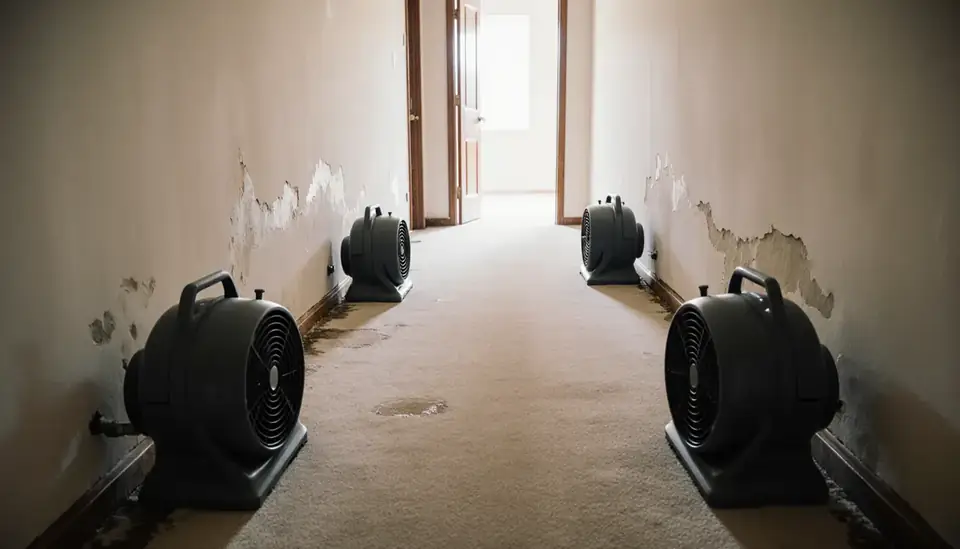
Restoration work here follows a familiar order, adjusted for cold weather. The leak is stopped, standing water is pulled out, wet carpet pad and baseboards are removed where needed, and dehumidifiers and air movers run for several days. In winter, the house has to stay heated during drying, so a provider may ask you to keep the thermostat up and windows closed. Take photos before anything is moved, keep damaged materials until your insurer says otherwise, and ask for the moisture readings in writing.
Burst-pipe damage is often handled differently by insurers than gradual seepage, so read your policy or call your agent early. Neighbors up the highway in Redmond deal with the same freeze patterns, and the call process is the same anywhere in the region.
Areas In and Around Bend
Calls come in from across Bend, including:
- Old Bend
- River West
- Awbrey Butte
- Boyd Acres
- Larkspur
- Old Farm District
- Orchard District
- Southern Crossing
- Summit West
- Mountain View
The same line also serves nearby communities such as:
- Redmond
- Sisters
- La Pine
- Tumalo
- Terrebonne
Questions From Bend Property Owners
Does Bend get floods from the Deschutes River?
The river runs through the middle of town and through Mirror Pond, and low properties near its banks can have mapped flood risk. For most Bend households, though, the more common sources are frozen pipes, appliance failures and snowmelt leaks. You can look up your address on the FEMA Flood Map Service Center to see whether your lot sits in a mapped flood zone before deciding on flood coverage.
A pipe burst while I was away skiing. What should I do first?
Shut off the main water valve, turn off power to any rooms where water reached outlets or electrical equipment, and photograph everything before moving furniture. Then call (888) 317-9980 and we will connect you with an independent provider serving Bend. Water that ran for hours often travels into lower floors and wall cavities, so a moisture inspection matters even where surfaces look dry.
Is mold really a concern in such a dry climate?
On open surfaces, Bend's low humidity helps things dry. The problem is hidden moisture: wet subfloors, soaked insulation and the backs of cabinets can stay damp long enough for mold to start, especially in winter when homes are closed up. Prompt drying with moisture readings is the practical way to keep a leak from turning into a mold problem later.