
Rockaway Beach began as a seaside resort in 1909, and the train from Portland started running in 1912. More than a century later it is still mostly a place of beach houses and cabins along U.S. 101 between Nehalem Bay and Tillamook Bay, with an official elevation of about 13 feet. Nearly two-thirds of its homes were vacant at the 2020 census, which on this coast means seasonal and vacation property, and the year-round population is older than most, with a median age of 59.
Those two facts, empty houses and a wet, windy winter, explain most of the water damage calls here. Call (888) 317-9980 at any hour and we'll connect you at no cost with an independent restoration provider that serves Rockaway Beach and the rest of north Tillamook County. The company you reach sets up the inspection, quotes the job and does the work under its own terms.
How the call works: when you call (888) 317-9980, The Restoration Job connects you with an independent restoration provider that serves Rockaway Beach. That provider inspects the damage, explains the scope and quotes the work. The Restoration Job doesn't perform restoration itself. Read our referral disclosure.
Living Between Two Bays on the Tillamook Coast
The town stretches along a narrow coastal strip. To the north, Nehalem Bay collects the Nehalem River, which drains more than 850 square miles of the Coast Range. To the south, past the unincorporated community of Twin Rocks and the fishing town of Garibaldi, lies Tillamook Bay, fed by four rivers. Within city limits, the 46-acre Old Growth Cedar Preserve, opened in 2019, protects a patch of wetland.
Wet ground is never far away in a setting like this. Low lots drain slowly in long storms, crawl spaces collect water, and properties close to wetlands or creeks can see standing water around foundations. Tillamook, the county seat, averages around 88 inches of rain a year, and the north county coast sees the same winter storms. Look up your address on the FEMA flood map to understand how your lot is mapped.
The 2007 Gale and Wind-Driven Rain
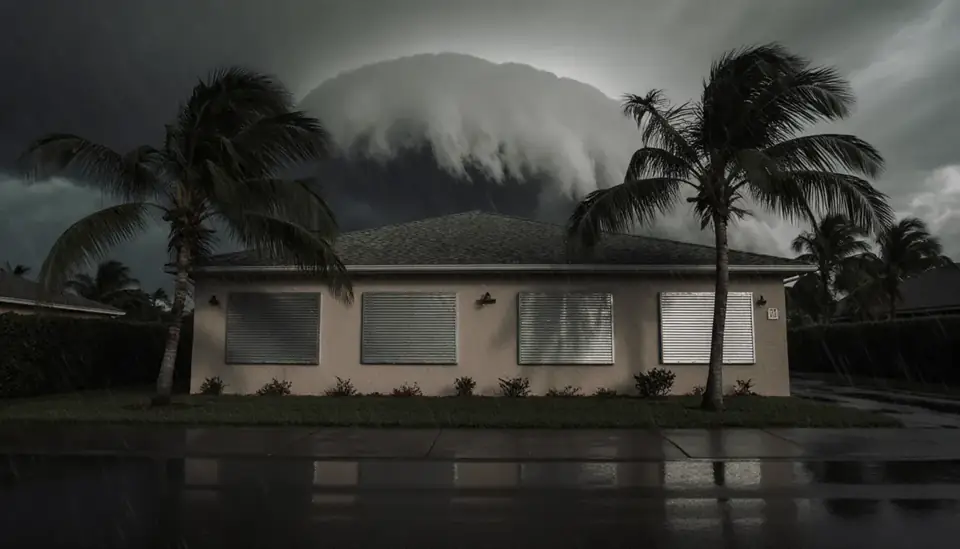
On December 2 and 3, 2007, the Great Coastal Gale brought a 129 mph gust to nearby Bay City and gusts over 100 mph at Tillamook. Highways to the valley closed, phone service along the coast failed for days, and Tillamook County was declared an emergency and approved for federal disaster aid. For anyone who owned a beach house here but lived inland, that meant days of not knowing what had happened to it.
Wind like that strips roofing, breaks windows and forces rain through siding. Damage often shows up as a stain on the storm-facing wall or ceiling, and water can sit inside the wall for a while before it does. Prompt tarping and removal of soaked insulation and drywall are core parts of storm damage cleanup after a coastal gale.

Cabins Left Alone for the Winter
Most of the damage that adds up to a big repair bill here starts small: a toilet supply line, a washing machine hose, a water heater, a pipe that gives out in a cold snap. With nobody home, it runs. Practical precautions for part-time owners:
- Turn off the main water supply when leaving the house for more than a few days.
- Keep some heat on so the inside air doesn't stay cold and damp.
- Install leak sensors that alert your phone, especially near the water heater.
- Arrange for a neighbor or caretaker to check the place after big storms.
- Keep your insurer's claim number and a list of shutoff locations by the door.
If water has been standing for a while, professional water extraction followed by measured drying is the way to limit what has to be replaced.
Damp Air, Closed Rooms and Mold
Mold is the usual second chapter after a leak in a closed coastal house. Cold rooms with no air movement and humid outdoor air are ideal for it, and growth can begin within a few days on wet drywall, carpet backing or wood. Owners often notice it first as a stale, musty smell when they open the house.
Drying should be verified with moisture readings, not judged by touch. Where mold has already spread across a wall or ceiling, a provider will typically set up containment and remove affected materials before rebuilding, and the original leak needs to be fixed first.
Rockaway Beach Neighborhoods and Surrounding Towns
The same line also serves nearby communities such as:
- Twin Rocks
- Garibaldi
- Bay City
- Tillamook
- Nehalem
Rockaway Beach Water Damage Questions
I found water damage when I opened my Rockaway Beach cabin. Where do I start?
Shut off the main water valve, turn off power to wet rooms if the panel is dry, and photograph everything before you move it. Then call your insurer. You can call (888) 317-9980 to be connected with an independent restoration provider that serves the area. Note how long the house was empty; it affects both the cleanup and the claim.
Will insurance cover a leak that went unnoticed for weeks?
That depends on your policy. Many cover sudden, accidental water damage but limit claims for long-term leaks or for homes left unoccupied beyond a set period, especially if heat wasn't maintained. Read the vacancy and maintenance language in your policy, and ask your agent before winter if the house will sit empty for long stretches.
Is The Restoration Job the company that fixes my house?
No. We are a referral line. When you call, we connect you with an independent restoration company that serves Rockaway Beach. That company inspects, quotes and carries out the water removal, drying and repairs under its own agreement with you. Ask it to share moisture readings and photos if you can't be on site.