
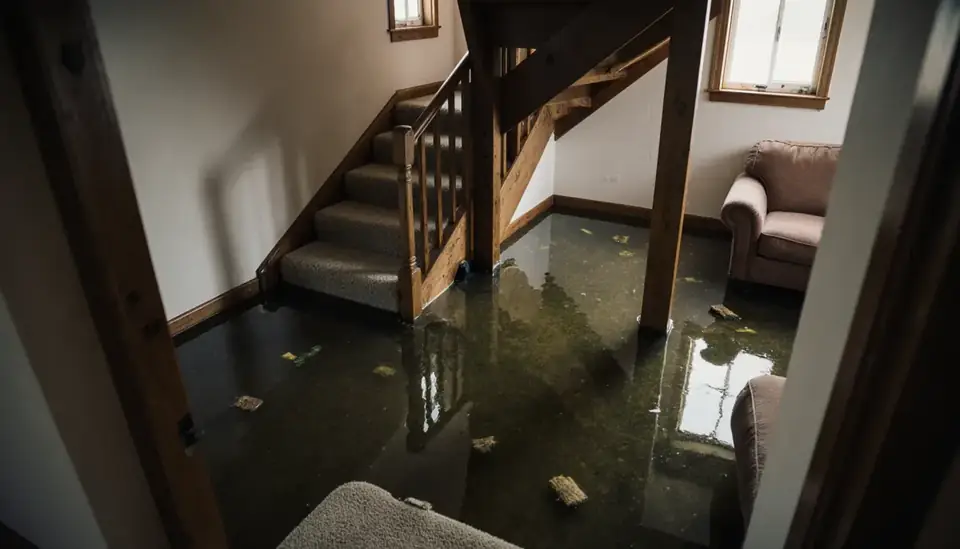
Two rivers meet at the north edge of Yakima. The Naches River forms the city's northern border and joins the Yakima River, and the 20-mile Yakima Greenway now runs along both, on ground the rivers have reclaimed more than once. The valley gets only about 8 inches of precipitation a year, so most damage inside local homes has nothing to do with rain. It comes from pipes that freeze in January, supply lines that let go while a house sits empty, and winter storms that drop rain on deep Cascade snow and send the Naches over its banks.
Nobody from The Restoration Job will show up with fans or a pump; this is a free referral line. Call (888) 317-9980 at any hour and we'll connect you with an independent restoration provider that serves the city, Union Gap and the surrounding Upper Valley. That company inspects the damage, explains its plan and pricing, and works with you directly.
How the call works: when you call (888) 317-9980, The Restoration Job connects you with an independent restoration provider that serves Yakima. That provider inspects the damage, explains the scope and quotes the work. The Restoration Job doesn't perform restoration itself. Read our referral disclosure.
When the Naches Rises at the North End of Town
The National Weather Service gauge on the Naches River near Naches is the one to watch for north Yakima. At 16 feet, the forecast service expects minor flooding near the Ramblers Park Levee west of the city. At 17.8 feet, flooding reaches the north end of Yakima, along with Eschback Park and Painted Rock upstream. At 21 feet, the impact statement calls for major flooding of residences from Cliffdell down through Naches to the north end of town.
The record at that gauge is 22.9 feet from December 1933, followed by 22.36 feet in February 1996. The river reached 20.91 feet on December 11, 2025, the third-highest crest on the list, and it topped 20 feet in May 2011 and December 2015 as well. Below the confluence, the Yakima River near Parker crested at a record 16.21 feet on February 9, 1996, a level the Weather Service associates with severe flooding from Selah to Prosser.
River water carries silt and sewage. Drywall, insulation and carpet that it soaks usually come out rather than being dried in place, which is why flood cleanup after a Naches or Yakima River event looks more like demolition than drying in its first days.
A Dry Climate Where Plumbing Causes Most Losses
The city's coldest reading on record is 25 below zero, set on February 1, 1950, and snowfall of around 20 inches a year is concentrated in December and January. Arctic air settling into the valley freezes pipes in exterior walls, unheated garages and crawl spaces. The break often does not show until the pipe thaws, so the first sign may be water running out from under a baseboard days after the cold snap.
- Seasonal irrigation: The city runs its own irrigation system with set turn-on and turn-off dates each year. A yard line or valve that cracked over the winter may only start leaking when pressure returns in spring, and water near the foundation can find its way into a crawl space or basement.
- Drywells and ponding: Much of the city's runoff goes into the ground through drywells and other underground injection systems. During a fast snowmelt or a summer cloudburst, water can collect at low spots and against foundations before it drains.
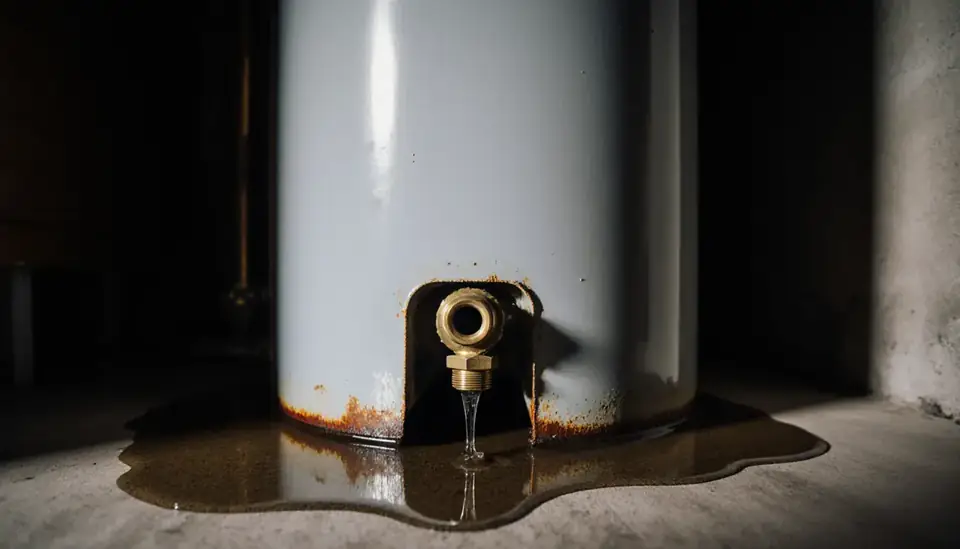
- Appliances and water heaters: A failed washer hose or ice-maker line can run for hours, and a slow drip behind a cabinet can go unnoticed in a dry house.
What Drying a House Here Actually Involves
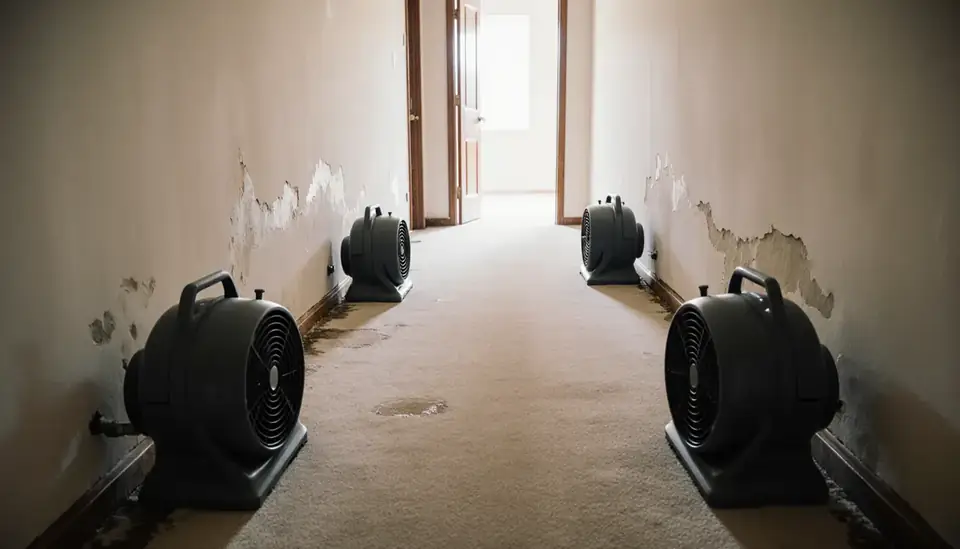
A provider will usually start by stopping the source, removing standing water and mapping moisture with meters, because water travels under flooring and up drywall farther than it looks. Wet materials that cannot be saved are cut out. Then air movers and dehumidifiers run for several days while the readings are checked until framing and subfloor reach normal levels. Low outdoor humidity helps, but closed-up rooms in winter can stay damp without equipment. Our structural drying page describes that phase in more detail.
Before anyone arrives, shut off the main water valve, turn off power to wet rooms if it is safe to reach the panel, and photograph everything for your insurer. Sudden pipe bursts are often treated differently by homeowners policies than slow leaks or river flooding, and flood coverage is a separate policy. Ask your agent which applies before repairs begin.
Mold in a Semi-Arid Valley
Low humidity does not prevent mold. Inside a wall cavity, under vinyl flooring or in a crawl space with wet insulation, conditions are set by the leak, not by the weather outside, and mold can start within a couple of days. Musty odors, staining that spreads at the base of drywall, or warped trim after a leak are signs that water stayed longer than it should have.
Wiping visible growth off a surface does not deal with what is behind it. A professional will look for the moisture source first and then remove affected material under containment. If you suspect hidden growth after a winter pipe break or a river event, our overview of mold remediation explains what that work looks like.
Planning Ahead in the Upper Valley
The Yakima Fire Department handles emergency management for the city and publishes flood safety information for Yakima and Union Gap, plus a flood preparedness guide for businesses. Property owners near the Naches and Yakima rivers can check whether their parcel is mapped in a flood zone through FEMA's Flood Map Service Center, and the Weather Service office in Pendleton posts river forecasts and warnings for the valley.
For pipes, the usual winter steps still pay off here: disconnect hoses, insulate lines in crawl spaces and garages, and keep heat on in a house that will sit empty. When Mount St. Helens erupted on May 18, 1980, ash fall overwhelmed the city's wastewater treatment plant, a reminder that sewer systems can be stressed by events nobody plans for.
Where Callers in the Yakima Area Are
Calls come in from across Yakima, including:
- Downtown Yakima
The same line also serves nearby communities such as:
- Union Gap
- Selah
- Terrace Heights
- West Valley
- Moxee
- Tieton
- Wapato
Yakima Water Damage Questions
Which river gauge matters most for flooding in north Yakima?
The Naches River near Naches. The National Weather Service expects minor flooding at the north end of Yakima at about 17.8 feet and major flooding of homes along the river at 21 feet. The gauge reached 20.91 feet on December 11, 2025, the third-highest crest recorded there. Pendleton's Weather Service office posts forecasts for it during high-water events.
Why does my crawl space get wet in spring when it hardly rains?
Snowmelt and irrigation are common reasons. Yakima runs a seasonal irrigation system, and a line or valve that cracked over winter can leak once pressure returns. Runoff that drains into the ground through drywells can also pool against foundations at low spots. A moisture check will usually show whether water is coming from outside or from plumbing.
Is mold really a concern in a climate this dry?
Yes, when water is trapped. Outdoor humidity is low, but a soaked wall cavity, carpet pad or crawl-space insulation stays wet unless it is opened up and dried. Mold can begin in a couple of days in those spaces. Prompt drying after a pipe break is the main way to prevent it.
Who will actually come to my house if I call?
A third-party company does. Our free line, (888) 317-9980, connects you with an independent restoration provider covering the Upper Valley. That company sets its own schedule, scope and pricing, and you deal with it directly. Some take after-hours calls; ask when you are connected.