
Few places in Georgia grew as quickly as Woodstock. A railroad town of about 2,700 people in 1980, it passed 10,000 by 2000 and 35,000 by 2020, and in 2007 it ranked as the tenth fastest-growing suburb in the country. Running through all that new development are the Little River, Noonday Creek and Rubes Creek, whose corridors now carry the city's Greenprints trails. The first two set high-water marks during the September 2009 floods.
The Restoration Job connects Woodstock homeowners and businesses with independent restoration providers. It is a free referral service, and the phone line is open 24/7: call (888) 317-9980 to be put in touch with a company that serves Cherokee County.
How the call works: when you call (888) 317-9980, The Restoration Job connects you with an independent restoration provider that serves Woodstock. That provider inspects the damage, explains the scope and quotes the work. The Restoration Job doesn't perform restoration itself. Read our referral disclosure.
Little River and Noonday Creek in September 2009
The National Weather Service lists two Woodstock gauges among the record-setting readings of the 2009 floods: the Little River crested at 20.80 feet against a flood stage of 11, and Noonday Creek reached 19.66 feet against a flood stage of 10, both on September 21. Across the region about 20,000 homes, businesses and other buildings took major damage, and 17 Georgia counties received federal disaster declarations.
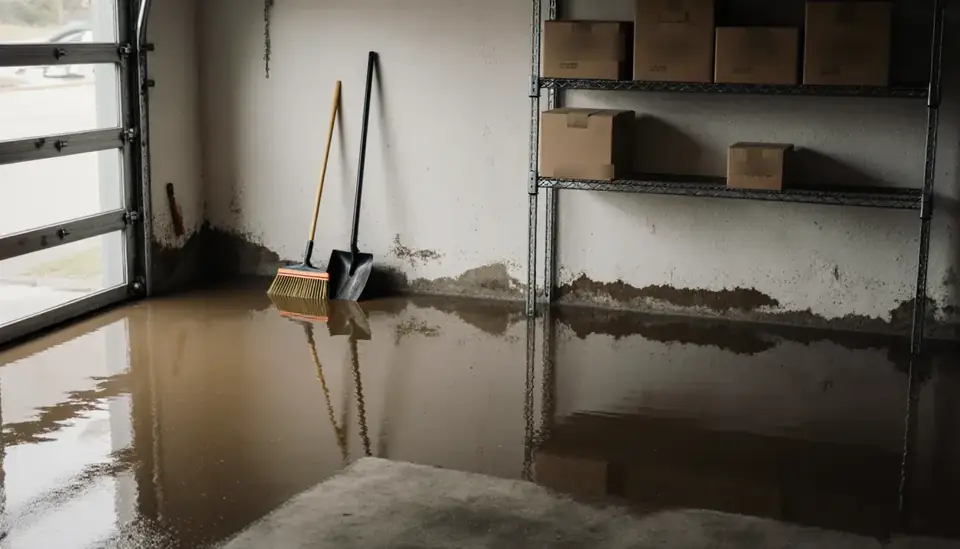
Those crests are a reminder that the creek corridors now lined with trails are also floodways. Houses near Olde Rope Mill Park, the Noonday Creek greenway or low spots along Rubes Creek may sit closer to mapped flood areas than their owners realize. Check the address on FEMA's flood maps, and keep in mind that standard homeowners coverage does not pay for rising water. When creek water does reach a house, flood cleanup has to treat it as contaminated, because it carries silt, fuel and sewage from upstream.
Subdivisions Built in Two Decades
With the population climbing from under 3,000 to over 35,000 in forty years, much of Woodstock's housing is suburban construction from the last few decades. Where a house has an upstairs laundry room or an air handler in the attic, water sources sit directly above finished living space. Problems that commonly show up as homes like these age:
- Washing machine hoses that split and run until someone comes home.
- Attic air handlers whose condensate pans overflow when the drain line clogs with algae in summer.
- Water heaters reaching the end of their service life, sometimes in closets or garages next to finished rooms.
- Shower pans and tub surrounds that leak slowly into the ceiling below.
When a second-floor leak comes through a ceiling, the water usually travels farther than the stain shows, following joists and wiring runs. A structural drying plan should map wet areas with a meter before deciding what to cut out.

Steps for the First Hours After a Leak
Shut off the main water valve, then cut power to any room where water is near outlets or light fixtures. Take photos and video of everything wet before moving it, including the source of the leak. Move rugs, furniture and electronics out of the area, and put foil or blocks under furniture legs that cannot be moved.
Call your insurer early so an adjuster is assigned, and keep receipts for anything you spend on emergency protection. A restoration provider will typically extract standing water, remove wet carpet pad, set drying equipment and log moisture readings daily. Ask for copies of those readings; they document the claim and show when the structure is actually dry.
City Utilities and Who Owns the Drainage
Woodstock runs its own water and sewer utility and its public works department maintains public storm water facilities. Questions about a street inlet, a drainage pipe under the road or a city water line can go to Public Works at 770-592-6038. Drainage features inside a subdivision, such as detention ponds and private pipes, are often the responsibility of a homeowners association, so check your plat or HOA documents before assuming the city will fix a backyard problem.
A sewage backup into a lower-level bathroom or floor drain needs different handling from a clean-water leak. Porous materials it touches usually have to go, and many policies cover backups only with an added endorsement.

Humidity, Basements and Mold
Cherokee County's southern half lies in the rolling Piedmont. On sloped Woodstock lots, a house with a walkout basement or a lower level partly below grade has walls that can seep after a week of rain, and in humid Georgia summers a damp basement grows mold quickly. Run a dehumidifier in lower levels, keep gutters clear and extend downspouts well away from the foundation.
If drywall, carpet or stored boxes in a basement stayed wet for more than a day or two, inspect for growth behind and under them. Small areas can be handled by a homeowner, but larger patches or growth inside wall cavities call for mold remediation with containment so cleanup does not spread spores upstairs.
Neighborhoods and Nearby Communities
Calls come in from across Woodstock, including:
- Downtown Woodstock
- Towne Lake
The same line also serves nearby communities such as:
- Holly Springs
- Canton
- Acworth
- Kennesaw
- Roswell
- Mountain Park
Common Questions
Is my Woodstock home at risk if it is near the Noonday Creek trail?
It may be. Noonday Creek crested at 19.66 feet on September 21, 2009, and land beside a creek corridor is the first to flood. Look up your exact address on the FEMA Flood Map Service Center. Even homes just outside the mapped area can take water during extreme rain, which is why many owners near creeks carry flood insurance anyway.
Who maintains the drainage pond in my Woodstock subdivision?
That depends on how the subdivision was platted. The city maintains public storm water facilities, but many detention ponds and pipes inside neighborhoods belong to an HOA or to individual lots. Your plat, deed or HOA covenants usually say who is responsible. Woodstock Public Works at 770-592-6038 can tell you whether a structure is public.
My attic air handler overflowed into the ceiling. Is that a big job?
It can be, because condensate overflows tend to run for days before anyone notices a stain. The water soaks attic insulation and the top of the drywall, then spreads along joists. A restoration provider will check the ceiling and walls with a moisture meter, remove soaked insulation and dry the cavity. Have an HVAC technician clear the drain line and check the safety float switch.
What should I do first if creek water gets into my Woodstock home?
Stay out of standing water until power to the area is off, and do not drink or touch it without gloves, since creek floodwater carries sewage and chemicals. Photograph the waterline on walls and furniture. Call your flood insurer, then arrange cleanup. Drywall and insulation that floodwater touched are normally cut out above the waterline rather than dried.