

Two rivers frame this city. The Willamette runs along its eastern side past Willamette Falls, and the Tualatin finishes its long, slow trip across Washington County by emptying into the Willamette right here. Between them, West Linn climbs from about river level to hillside neighborhoods several hundred feet up, so the water problems people face depend heavily on where their house sits.
Help here starts with a free phone call to The Restoration Job, a referral service. Dial (888) 317-9980 and we will put you in touch with an independent restoration provider that works in West Linn and nearby Clackamas County communities. The provider assesses the damage and handles the job, pricing and paperwork with you directly.
How the call works: when you call (888) 317-9980, The Restoration Job connects you with an independent restoration provider that serves West Linn. That provider inspects the damage, explains the scope and quotes the work. The Restoration Job doesn't perform restoration itself. Read our referral disclosure.
Linn City and the Great Flood of 1862
West Linn's history carries a flood warning. Robert Moore's settlement across from Oregon City was renamed Linn City in 1845, and a major fire in 1861 followed by the Great Flood of 1862 effectively ended it. The city that exists today incorporated in 1913 and merged with the neighboring town of Willamette in 1916.
The modern record belongs to February 1996, when the Tualatin reached 26,400 cubic feet per second at its West Linn gauge, the highest flow ever measured there. The confluence area and other low ground along both rivers remain the places most exposed to rising water. Clackamas County's own records show what the big floods can do nearby: in 1964 the Oregon City Shopping Center, just across the river, filled with about 34.5 inches of water.
Hillside Lots, Runoff and Lower Levels
Most of West Linn is not on a floodplain, but the hills create their own kind of trouble. Rain that falls on streets, driveways and roofs uphill moves downhill fast, and homes cut into slopes can collect that runoff against foundation walls and in daylight basements or lower-level rooms. Clackamas County also lists landslides alongside flooding as local hazards, and saturated soil on steep ground is a concern in the wettest stretches of winter.
Signs worth acting on include water seeping where a slab meets a wall, damp carpet along an uphill wall, and downspouts that empty right at the foundation. Correcting grading or drainage is outside the restoration scope, but drying the house properly is not. Structural drying uses dehumidifiers and air movers, with moisture readings taken until framing and subfloors are back to normal.

Neighborhoods From Old Townsites to Newer Infill
The city stitched together several older townsites, including Willamette, Bolton, Sunset City and West Oregon City, then annexed areas like Cedaroak, Marylhurst and Hidden Springs, with later infill in Tanner Basin. That mix means one street may have an early twentieth-century house while the next has a 1990s subdivision. Common failure points differ by era:
- Older homes: aging galvanized or cast-iron plumbing, original drain lines, and crawl spaces with little or no vapor barrier.
- Newer homes: supply lines to washers, ice makers and dishwashers, plus water heaters reaching the end of their service life.
- Any age: roof valleys, chimney flashing and skylights that let in wind-driven rain during winter storms.
What to Do in the First Hour
Shut off the water at the main valve, or at the fixture if you can isolate it. If water is near outlets, appliances or the electrical panel, turn off power to the affected area only if you can do so while standing on a dry surface. Photograph everything before moving items, then lift furniture legs onto blocks or foil and pull rugs off wet carpet.
If the water came from outside, such as runoff or river flooding, treat it as contaminated and keep children and pets away. Remember that homeowners insurance typically excludes surface flooding, which needs a separate flood policy. An independent provider can begin water damage repair by extracting standing water and mapping how far moisture has wicked into walls and floors.
Moisture That Lingers Into Mold
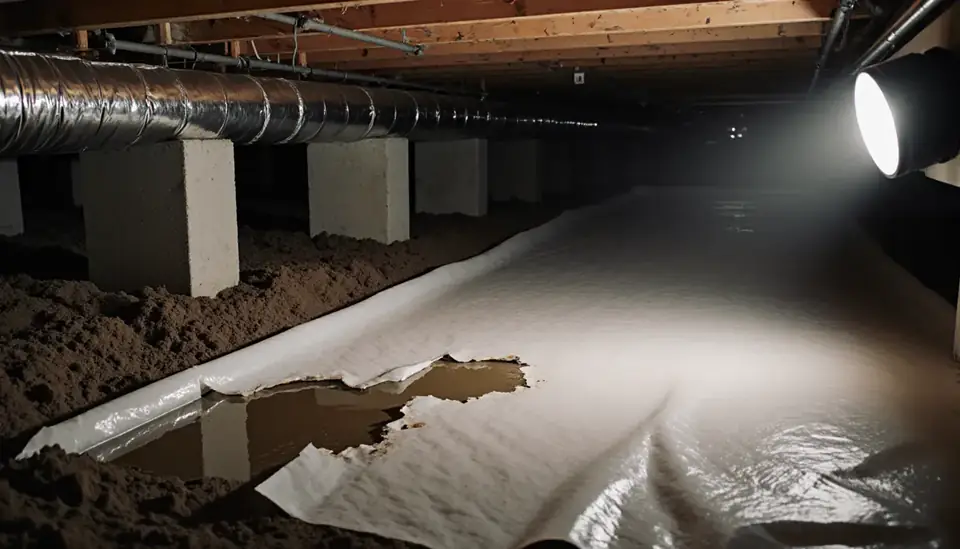
West Linn averages a little over 44 inches of precipitation a year, most of it in the cool months when indoor drying is slow. Wet drywall, wood trim and carpet pad that stay damp for more than a day or two can begin growing mold, especially in lower levels, crawl spaces and closets on exterior walls. Running heat and opening windows helps less than people expect when the outside air is just as damp.
Dehumidification and prompt removal of soaked materials are what prevent most mold problems after a leak. Where growth is already visible across a large area, remediation should include containment so spores are not spread to the rest of the house. Homes upriver in Wilsonville face similar winter conditions along the Willamette.
Where Callers in the West Linn Area Are
Calls come in from across West Linn, including:
- Willamette
- Bolton
- Cedaroak
- Marylhurst
- Hidden Springs
- Tanner Basin
The same line also serves nearby communities such as:
Questions From West Linn Property Owners
Does West Linn flood from the Tualatin or the Willamette?
Both rivers can rise in long winter storms, and the Tualatin meets the Willamette within the city. The highest Tualatin flow on record was measured at the West Linn gauge in February 1996. Most of the city sits on higher ground, so river flooding is a concern mainly for low-lying property near the banks. Check your address on FEMA's flood maps to see where it falls.
Water is coming into my lower level from the hillside. What now?
Move belongings off the floor, clear any blocked drains or window wells you can reach safely, and redirect downspouts away from the wall. Then get the water out and the room drying quickly. A restoration provider can extract water and set up drying; fixing grading or installing drainage is usually a separate job for a contractor.
Where do I get flood and landslide alerts in West Linn?
Clackamas County Disaster Management sends warnings through PublicAlerts, which residents can sign up for on the county website. The county lists flooding, landslides and winter weather among its hazards, and its flooding page explains where to find sandbag distribution sites. The National Weather Service Portland office posts river forecasts and flood watches.