
Sandy is the western gateway to the Mount Hood Corridor, a foothill town on U.S. Route 26 about 27 miles east of Portland. At roughly 1,000 feet in elevation, it sits several hundred feet higher than the cities near the Columbia, and it catches far more rain: about 61 inches in an average year, with December alone bringing around 9 inches. The Sandy River, the town's namesake, flows past the town on its way down to Troutdale and the Columbia.
The Restoration Job connects callers with independent restoration providers, free, through a line that answers 24 hours a day. Call (888) 317-9980 and you will be referred to a company that serves Sandy, Boring and the communities up the corridor. That company inspects the damage, handles the drying and repairs, and agrees on the work directly with you.
How the call works: when you call (888) 317-9980, The Restoration Job connects you with an independent restoration provider that serves Sandy. That provider inspects the damage, explains the scope and quotes the work. The Restoration Job doesn't perform restoration itself. Read our referral disclosure.
Sixty Inches of Rain on a Foothill Town
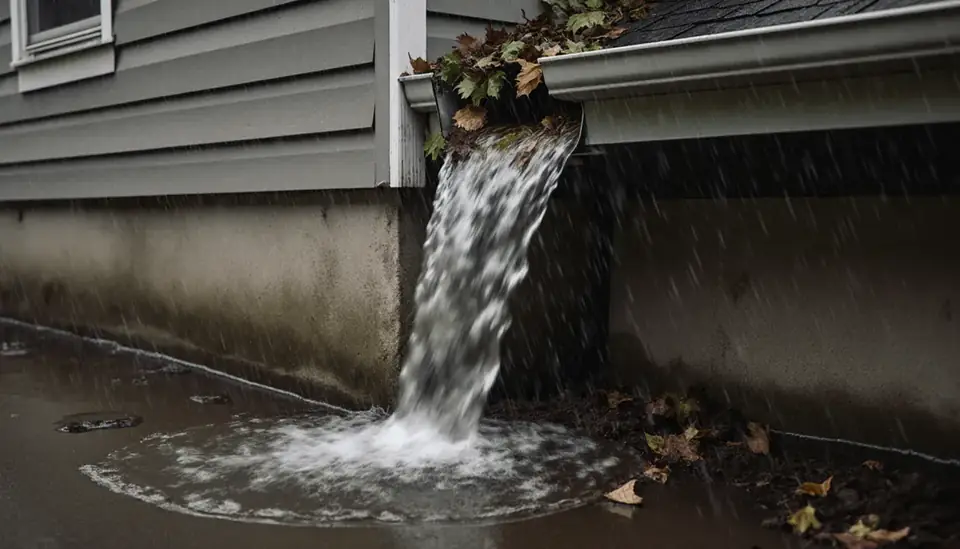
Sandy's monthly averages tell the story: about 8.6 inches in November, 9 in December, 7.8 in January and 6 in February. That is a lot of water for roofs, gutters and foundations to shed, and it arrives week after week. Gutters packed with fir needles and leaves overflow against siding, downspouts that dump next to the house saturate the soil around the foundation, and crawl spaces take on water from below.
Roof leaks are the other big source. A small flashing gap that would barely matter in a drier place can soak attic insulation and stain ceilings over a single wet month here. When wind or a falling limb opens up a roof, storm damage cleanup starts with a temporary cover, then drying of the attic and the rooms beneath it.
The Sandy River and Its Shifting Channel
Lewis and Clark called it the Quicksand River for its sandy banks, and it remains a river that moves sediment and changes course. Its maximum recorded daily flow at the Dodge Park gauge is 84,400 cubic feet per second, and the 1964 floods were severe enough that the Army Corps of Engineers later blocked some side channels. Since Marmot Dam was removed upstream in 2007, the river has run free for the first time since 1912.
Erosion is a bigger threat than standing water for many riverside properties. Clackamas County reports that flooding in 2011 caused significant bank erosion at 37 or more residential properties in the Sandy River area and led to nearly $4 million in public infrastructure repairs. The county publishes Channel Migration Zone resources for the Sandy, which show where the river is likely to wander. If your property is near the river, compare them with FEMA's flood map; a home that does take on river water will need full flood cleanup, not just drying.

Cold Snaps, Outages and Frozen Lines
Higher ground and proximity to the mountains bring winter storms that can include snow and ice, along with power outages that leave homes without heat. Clackamas County lists winter weather and power outages among its main hazards. Pipes in exterior walls, garages, crawl spaces and outbuildings are most at risk, and the damage usually appears when temperatures rise and the frozen section starts leaking.
- Find the main shutoff before the first freeze and test that the handle moves.
- Insulate exposed lines and close crawl space vents during hard freezes.
- During an outage, open cabinet doors under sinks and let a faucet drip.
- If you leave the house for a trip, set the heat no lower than the mid-50s or shut off and drain the water.
Houses Up the Corridor
The city counted about 4,700 homes in 2020, roughly two-thirds owner-occupied, and it serves as the shopping and service center for Boring and the Villages of Mount Hood beyond. Some calls come from homes well outside town, where a water heater in a garage or a line in an unheated outbuilding can fail unnoticed. Longer drives also mean a leak can run for hours before someone gets home to find it.
A leak detector with an automatic shutoff valve is worth considering for any house that sits empty during the day or for weeks at a time. After a loss, structural drying with dehumidifiers and daily moisture checks is what keeps framing and subfloors from staying wet in this climate.

Mold in a Wet, Shaded Climate
Heavy rain, cool temperatures and tall trees shading roofs and walls give moisture plenty of time to linger. After a leak, drywall, insulation and wood can start growing mold within a day or two, and attics and crawl spaces are where it usually goes unseen. If you notice a musty smell, dark spotting on sheathing or soft spots in a floor, have the area checked. Small patches can be cleaned; larger growth needs containment and removal of the affected material.
Where Callers in the Sandy Area Are
Calls come in from across Sandy, including:
- Downtown Sandy
The same line also serves nearby communities such as:
Common Questions
Why does Sandy get so much more rain than Portland?
Sandy sits in the Cascade foothills, where moist Pacific air is pushed upward and drops more of its water. The result is about 61 inches a year on average, with the heaviest months from November through January. That extra rain puts more strain on roofs, gutters and drainage around foundations, which is why roof leaks and wet crawl spaces are such common calls here.
My property is near the Sandy River. Is erosion covered by insurance?
Usually not by a standard homeowners policy, and coverage under flood insurance depends on the circumstances, so read your policy and ask your agent directly. Clackamas County documented significant bank erosion at dozens of homes after 2011 flooding and publishes Channel Migration Zone resources for the Sandy. Reviewing those, along with FEMA's flood map, helps you understand the specific risk to your lot.
What should I do first if a pipe bursts during a power outage?
Shut off the main water valve immediately, and if you have a well, turn off the pump breaker once power returns. Move belongings out of the water and photograph the damage for your insurer. Without power, drying cannot start, so get as much water off floors as you can and call for a restoration provider so equipment can go in as soon as electricity is back.