
Wood Village is one of the smallest cities in the Portland area, covering less than one square mile between Fairview to the west, Troutdale to the east and Gresham to the south. It began as a company town for the Reynolds Aluminum plant in Troutdale, and residents voted 156 to 35 to incorporate on June 18, 1949. About 4,400 people lived here at the 2020 census, in roughly 1,370 homes, with about a third of households renting.
Through The Restoration Job, one phone call to (888) 317-9980 reaches an independent restoration company that works in Wood Village and the rest of east Multnomah County. There is no charge for the connection. The company you speak with assesses the damage, explains what needs to be dried or replaced, and handles the job with you.
How the call works: when you call (888) 317-9980, The Restoration Job connects you with an independent restoration provider that serves Wood Village. That provider inspects the damage, explains the scope and quotes the work. The Restoration Job doesn't perform restoration itself. Read our referral disclosure.
Close to the Gorge, With the Weather to Match
At about 151 feet in elevation and only a few miles from the west end of the Columbia River Gorge, Wood Village gets the same winter pattern as its neighbors: pressure differences across the Cascades drive cold east winds out of the Gorge and set up snow and ice storms. The city's 0.94 square miles are all land, with no river running through town, so most water damage here is not river flooding. It comes from freezes, wind-driven rain and the plumbing inside the house.
The usual sequence after a cold snap is a pipe that froze in an exterior wall, an unheated garage or a crawl space, then a leak that appears when temperatures rise. Wind can also tear shingles loose or drop branches on a roof, opening a path for the next rain. For leaks that come in from above, storm damage cleanup often starts with tarping the roof before any interior drying begins.
Renters, Owners and Leaks Through Shared Walls
With about 34 percent of homes renter-occupied, many calls in Wood Village involve two parties. A tenant notices the leak, but the landlord owns the building and its insurance. If you rent, tell the landlord or property manager in writing right away, take photos with dates, and keep a list of your own damaged belongings for a renters policy. If you own a rental, ask the tenant for access quickly so drying can start; delays are the main reason a simple leak turns into replaced floors.
In attached housing, water from one unit often shows up in the next. The unit where the leak started is usually where the repair begins, but every affected space needs to be checked with a moisture meter, including ceilings below and walls on the other side.
Sign Up for Alerts and Keep Plastic Sheeting on Hand
The city's emergency preparedness page encourages residents to register for Flash Alert notices about city emergencies and closures and for PublicAlerts, which sends county warnings by text, email or phone. Its suggested home kit includes items that are directly useful when water gets in:
- Plastic sheeting and duct tape to cover a broken window or protect belongings under a leaking ceiling.
- A battery radio and flashlight for power outages during ice storms.
- Basic tools, including whatever you need to turn off the water and gas.
- A gallon of drinking water per person per day, in case a frozen or broken main affects supply.
During severe cold, Multnomah County opens warming shelters; the city links to the county locator, and 2-1-1 can arrange transportation.
After the Leak Stops: Extraction and Drying
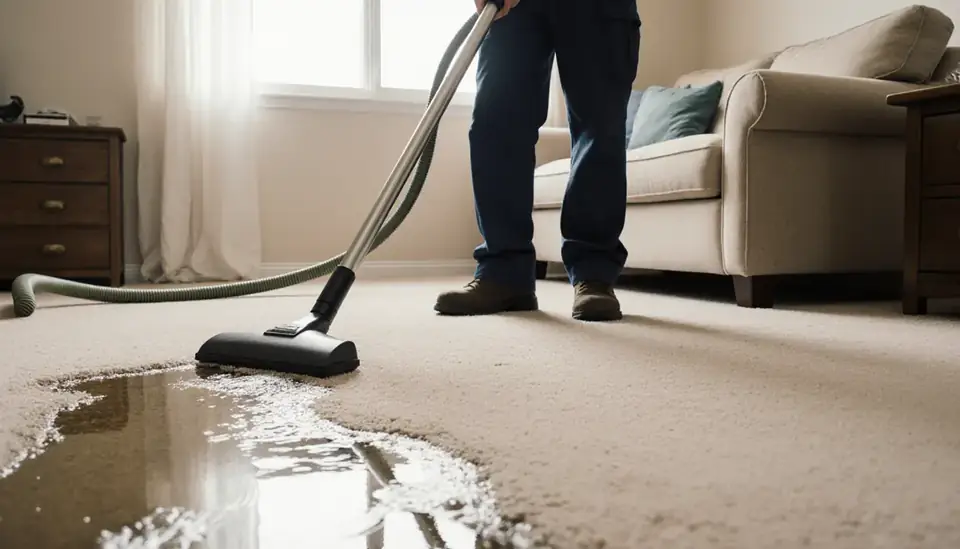
The first goal is to remove liquid water. Water extraction with truck-mounted or portable units pulls water from carpet, pad and subfloor far faster than towels or a shop vacuum. Then comes drying: dehumidifiers and air movers set up in closed rooms, with moisture readings taken each day. Baseboards may be pulled and small holes drilled near the floor to ventilate wall cavities.
How much has to be removed depends on the water source and how long it sat. A clean supply-line leak caught within a day can often be dried in place. A toilet overflow, a sewage backup, or water that sat for several days usually means cutting out pad, drywall and insulation.

Outages, Indoor Humidity and Mold
East county winters are long and damp, and indoor humidity climbs when the heat is off during an outage. Wet drywall, carpet backing and wood framing can begin growing mold within a day or two. Run a dehumidifier, keep the heat on, and do not close up walls until readings confirm the materials are dry. Visible growth larger than a small patch is worth professional cleanup with containment.
Neighborhoods and Nearby Communities
Calls come in from across Wood Village, including:
- Wood Village Town Center
The same line also serves nearby communities such as:
Common Questions
Does Wood Village have flood zones?
The city has no large rivers inside its small footprint, so river flooding is less of a concern than in parts of Troutdale and Fairview. That does not rule out water from heavy rain, a blocked storm drain or a high water table. Check your address on FEMA's Flood Map Service Center, and remember that most water damage claims here start with plumbing or roof leaks.
How do I get emergency alerts in Wood Village?
The city recommends signing up for Flash Alert, which sends notices about city emergencies and closures, and for PublicAlerts, which delivers Multnomah County warnings by text, email or voice call. Both are worth having before winter, since ice storms and east winds can knock out power and make roads hazardous with little notice.
I rent my home. Who pays to dry it out?
Building repairs, including drying walls and floors, are normally the owner's responsibility and fall under the landlord's policy. Your own furniture, electronics and clothing are covered only if you carry renters insurance. Notify the landlord in writing as soon as you see water, document everything with photos, and ask that drying begin quickly to limit mold.